
Two top Muslim organisations -- All India Milli Council and Jamiat-e-Ulema Hind (Mahmood Madni) -- on Tuesday backed National Commission for Minorities (NCM) Chairman Wajahat Habibullah's call for scheduled caste status to Muslim and Christian Dalits.

The Supreme Court of India has directed the governments of Punjab and Haryana to cooperate with the Centre in finding an amicable solution to the long-standing dispute over the Sutlej-Yamuna Link (SYL) canal. The court deemed the de-notification of land acquired for the canal in Punjab an "act of high-handedness" and emphasized the need to consider "wider ramifications" beyond legal considerations. The court has set August 13 for a further hearing if an amicable solution is not reached.
Article 363 bars the interference of courts in any disputes which may arise from certain treaties, agreements, covenants, sanad, engagements, etc., executed between a princely state and the government of India.
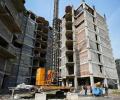
Observing an "unholy nexus" between the banks and developers to dupe homebuyers, the Supreme Court on Tuesday directed the CBI to register seven preliminary enquiries against builders in NCR, including Supertech Limited.
The Supreme Court of India has reserved its interim orders on three key issues related to the Waqf (Amendment) Act, 2025, including the power to denotify waqf properties, the composition of waqf boards, and the provision regarding government land. The court heard arguments from both the petitioners, who challenged the validity of the amended law, and the Centre, which defended the Act as a secular concept. The petitioners sought interim orders to prevent the implementation of certain provisions while the court considers the legal challenges.
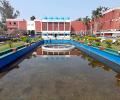
Merely because an educational institution is regulated by a statute does not take away from it the character of a minority institution, the Supreme Court observed on Tuesday as it commenced hearing the vexed question of minority status of Aligarh Muslim University (AMU).

The Supreme Court of India has ruled that religious conversions undertaken solely to avail reservation benefits without genuine belief in the adopted religion amount to "fraud on the Constitution". The court upheld a Madras High Court decision denying a scheduled caste certificate to a woman who converted to Christianity but later claimed to be a Hindu to secure employment benefits.
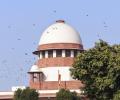
The Indian government defended the Waqf (Amendment) Act, 2025 in the Supreme Court, arguing that waqf, while an Islamic concept, is not an essential part of Islam. Solicitor General Tushar Mehta stated that waqf is essentially charity, which is recognized across religions, and cannot be considered a fundamental tenet of any faith. He also argued that the amended law addresses secular aspects of waqf and activities unrelated to Islam, and that "waqf by user" does not grant ownership of public land. Mehta highlighted the extensive consultations involved in the bill's creation, including feedback from various stakeholders. The hearing will continue on Thursday.

How does it matter for people whether the Aligarh Muslim University is a minority institution or not when it has continued to be an institute of national importance without the minority tag, the Supreme Court said on Thursday as it underlined that the intent of Article 30 of the Constitution is not to "ghettoise the minority".
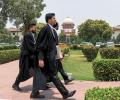
Underscoring the 'presumption of constitutionality in favour of law', the Supreme Court on Tuesday said petitioners challenging the waqf law needed a 'strong and glaring' case for interim relief.
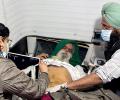
Farmer leader Jagjit Singh Dallewal, who was on an indefinite hunger strike in support of various demands, has broken his fast after the Punjab government intervened and dispersed protesting farmers at Khanauri and Shambhu borders. The Supreme Court lauded Dallewal's efforts and acknowledged the government's action, while also asking for a status report on the situation. Contempt proceedings against the Punjab chief secretary and Director General of Police for not complying with the court's order of providing medical aid to Dallewal were dropped.
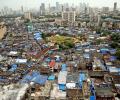
The Supreme Court of India has refused to halt the redevelopment project of Dharavi in Mumbai, allowing the Adani Group to proceed with their project. The court rejected a plea from Seclink Technologies Corporation, the original highest bidder for the project in 2018, which challenged the tender process and the award to Adani Properties Pvt Ltd in 2022. The court directed Adani Properties to make payments through a single bank account and ordered Seclink Technologies to file an affidavit detailing their increased offer for the project. The project work has already commenced, with constructions underway and 2,000 people employed on the site.

Grappling with the intractable issue of Aligarh Muslim University's minority status, the Supreme Court said on Thursday the 1981 amendment to the AMU Act, which effectively accorded it a minority status, only did a "half-hearted job" and not restore to the institution the position it had prior to 1951.
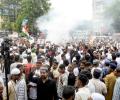
Congress MP Mohammad Jawed and AIMIM president Asaduddin Owaisi have challenged the validity of the Waqf (Amendment) Bill, 2025 in the Supreme Court, arguing that it violates constitutional provisions. The petitions claim the bill imposes arbitrary restrictions on Waqf properties and their management, undermining the religious autonomy of the Muslim community. They also allege that the bill discriminates against Muslims by imposing restrictions not present in the governance of other religious endowments. The bill was passed in the Rajya Sabha and Lok Sabha, with the petitioners arguing that it introduces limitations on the creation of Waqfs based on the duration of one's religious practice, mandates inclusion of non-Muslim members in Waqf administrative bodies, and shifts key administrative functions to government officials, thereby diluting the autonomy of Waqf management.
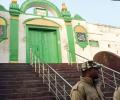
The Uttar Pradesh government has informed the Supreme Court that the disputed "private well" near the Mughal-era Jama Masjid mosque in Sambhal was situated on public land. The state government said the petitioner failed to disclose there was a well within the boundary walls of the mosque known locally as "yagna koop". The committee, in a spot inspection, found that the well was situated outside the mosque boundary wall, the report said. The report said the state was committed to ensuring peace and harmony in the region and any restraint on the use of such public wells by the community at large may not help in achieving that goal.
The Supreme Court of India has reprimanded the central government for failing to implement a cashless treatment scheme for road accident victims. The court expressed its concern over the delay in formulating the scheme, which is designed to provide immediate medical care to accident victims within the crucial "golden hour." The court highlighted that despite a statutory provision requiring the scheme's implementation, the government has not taken any action, prompting the court to intervene. The court also criticized the General Insurance Council (GIC) for raising objections to the scheme and delaying its implementation. The court has now directed the government to notify the scheme within a week and has scheduled a hearing on the matter for May 13.

The reservation policy requires a fresh relook and new methods are needed for the uplift of people belonging to Scheduled Castes (SC), Schedule Tribes (ST) and Other Backward Classes (OBC), Supreme Court judge Justice Pankaj Mithal said on Thursday.

The opposition parties and some former CECs had opposed the move, saying it will go against the independence of the institution.

A Public Interest Litigation (PIL) has been filed in the Supreme Court seeking immediate action to prevent future stampedes at railway stations. The PIL, filed by advocate Vishal Tiwari, calls for the implementation of a 2014 report by the National Disaster Management Authority (NDMA) on crowd management. The plea also criticizes the disparity in safety efforts, questioning why high-end technology and intelligence are deployed for VIPs while common citizens remain vulnerable to such incidents. The PIL seeks directions to the Indian Railways to take measures for passenger safety, including widening corridors, constructing broader over-bridges and platforms, and ensuring easy access to platforms through ramps and escalators.
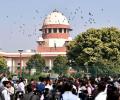
The Supreme Court on Friday said if it finds that authorities in Gujarat acted in contempt of its order on demolition of properties, it will ask them to restore the structures.
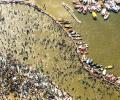
Terming as 'unfortunate' the January 29 stampede at Maha Kumbh where at least 30 people were killed, the Supreme Court on Monday refused to hear a public interest litigation (PIL) for guidelines over safety of devotees and asked the petitioner to move the Allahabad high court instead.

The Manipur government on Friday told the Supreme Court that it has filed a status report on the issue of recovery of arms from 'all sources' in the ethnic violence-hit state.

"Are you waiting for some muhurat," the Supreme Court remarked on Tuesday as it came down heavily on the Assam government for keeping people declared as foreigners in detention centres indefinitely rather than deporting them.
The Supreme Court on Monday said the trial of the Manipur ethnic violence cases, probed by the Central Bureau of Investigation, would be conducted in Guwahati, Assam, where it was transferred to earlier.

The Supreme Court has agreed to examine a PIL alleging that Arunachal Pradesh Chief Minister Pema Khandu awarded government contracts to his family members. The court has asked the state government to provide details of the beneficiaries and inform if due process was followed. The bench also sought responses from union ministries of home affairs, finance and the Comptroller and Auditor General of India on the issue within five weeks.
A plea in the Supreme Court of India seeks a direction to Delhi Police to lodge an FIR over the alleged discovery of semi-burnt stash of cash from the official residence of Delhi High Court judge Yashwant Varma. The plea challenges a 1991 judgement that prohibits criminal proceedings against judges without prior consent from the Chief Justice of India, arguing it violates the principle of equality before the law. It also seeks to declare the collegium's 3-member committee investigating the incident as having no jurisdiction and calls for action against corruption within the judiciary.
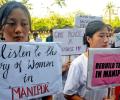
The report urged the top court that the matter may be taken up by the petitioners and other parties with utmost sensitivity as any misinformation or rumour or even suspicion may aggravate the situation in Manipur, where things are slowly returning to normal with the concerted efforts of the central and the state governments.

The Supreme Court of India censured the Assam government for keeping persons declared foreigners in detention centers indefinitely and not deporting them. The court questioned the state's explanation for not sending nationality verification forms to the Ministry of External Affairs, stating that detainees should be deported immediately once identified as foreigners. The court directed the Assam government to initiate the deportation process of 63 declared foreign nationals whose nationality was known and file a status report in two weeks. The court also directed the Centre to provide details of those deported and how it plans to deal with detainees whose nationality is unknown.
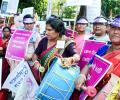
The Supreme Court has allowed the parents of the RG Kar Medical College rape and murder victim to pursue their plea for a further court-monitored CBI probe into the incident before the Calcutta High Court. The parents had expressed dissatisfaction with the CBI's initial probe and sought a more thorough investigation. The court, without making comments, disposed of the application, allowing the parents to continue the proceedings before the high court. The case has also prompted the Supreme Court to consider recommendations for preventing gender-based violence and developing safety protocols for medical staff at hospitals across the nation.
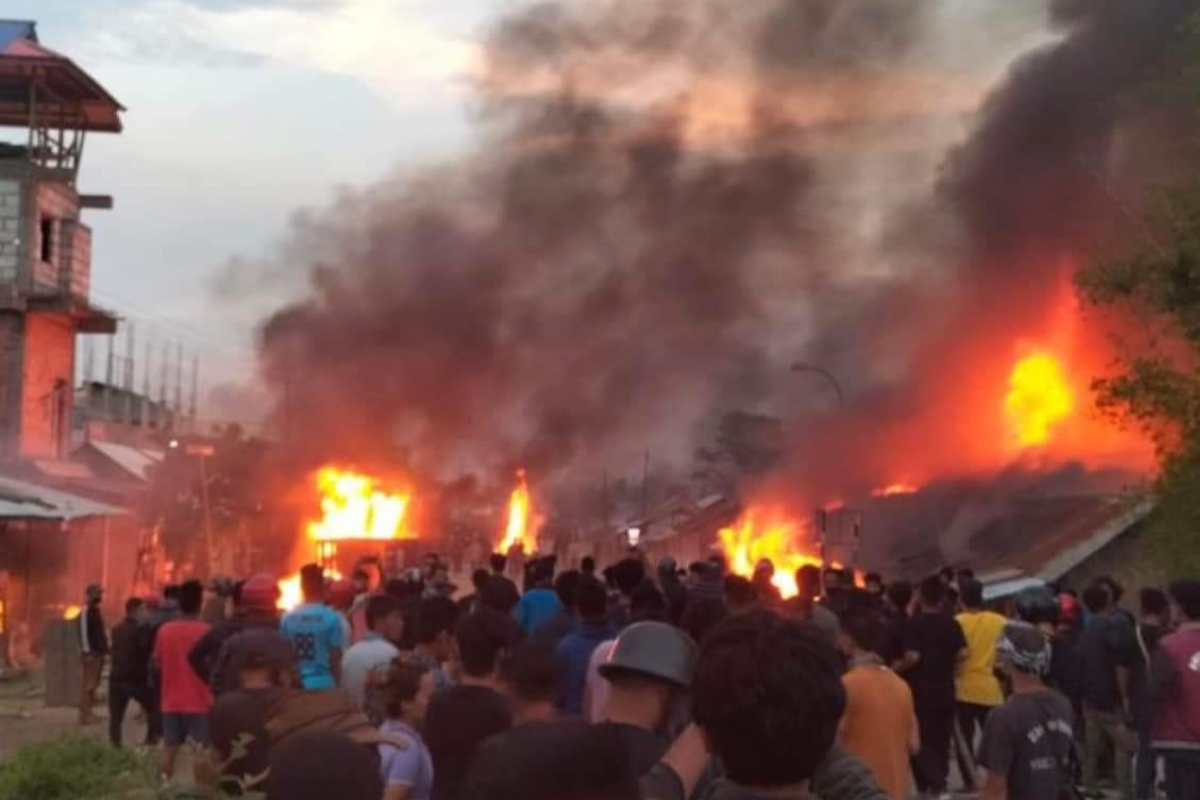
The top court asked the state government to spell out details of its actions taken against the culprits and the encroachers.

Tahawwur Rana, accused in the 2008 Mumbai terror attacks, has renewed his plea for a stay on his extradition to India, citing health concerns and alleging potential torture. He argues that his extradition would violate US law and the UN Convention Against Torture. Rana's lawyers claim he is at risk of being subjected to torture in Indian detention facilities due to his Pakistani origin, Muslim religion, and medical conditions. The US Supreme Court had previously denied his emergency bid for a stay, but he has now appealed to Chief Justice John Roberts. The US government has declined to provide information on any commitment from India regarding Rana's treatment, further fueling his concerns.

Asking Solicitor General Tushar Mehta, appearing for the state government, to file an updated status report, the bench said, "It should have details like rehabilitation camps, law and order and recovery of arms."
Highlights of the judgment pronounced by a five-judge Constitution bench of the Supreme Court that on Monday unanimously upheld the Centre's decision to abrogate provisions of Article 370 of the Constitution bestowing special status on the erstwhile state of Jammu and Kashmir.

The Act prohibits conversion of any place of worship and provides for the maintenance of the religious character of any place of worship as it existed on August 15, 1947.

The Supreme Court of India has directed Uttar Pradesh authorities to respond to contempt proceedings for allegedly razing a portion of a mosque in Kushinagar, defying a previous court order. The court has also ordered a halt to any further demolition of the structure. The demolition was carried out despite a November 2024 Supreme Court ruling that barred demolition without a prior show cause notice and a 15-day response period. The petitioners allege the demolition was carried out in violation of legal process and the Supreme Court's guidelines, as well as without providing an opportunity for a hearing.
A bench comprising Chief Justice Sanjiv Khanna and Justice Sanjay Kumar also indicated that it may not take up the pending scheduled petitions, heard earlier by a three-judge bench, during the day as it was sitting in a combination of two judges.

On February 1, grappling with the intractable issue of the AMU's minority status, the top court said the 1981 amendment to the AMU Act, which effectively accorded it a minority status, only did a "half-hearted job" and did not restore the institution the position it had prior to 1951.

The Supreme Court raised concerns about a potential stalemate in Tamil Nadu due to the Governor's delay in assenting to bills passed by the state assembly. The court questioned the Governor's actions, noting that he should have communicated his concerns about the bills' constitutionality to the state government. The case focuses on the delicate balance of power between the state government and the Governor, highlighting the importance of open communication and transparency in the legislative process.
Samajwadi Party leader and Kairana MP Iqra Choudhary has moved the Supreme Court seeking effective implementation of the Places of Worship (Special Provisions) Act, 1991. This move comes amidst several petitions challenging the law's validity, including those filed by the Akhil Bhartiya Sant Samiti and lawyer Ashwini Upadhyay. The Supreme Court, in December 2022, had restrained all courts from examining fresh suits and passing interim orders in pending cases seeking to reclaim religious places. The Act aims to maintain the religious character of places of worship as they existed on August 15, 1947, but the dispute relating to Ram Janmabhoomi-Babri Masjid at Ayodhya was kept out of its purview. The court has listed Choudhary's plea with other pending pleas for February 17.
The Tamil Nadu assembly on Wednesday passed a resolution urging the Centre to extend the benefits accorded to Scheduled Castes also to those among the SCs embracing Christianity.
 © 2026 Rediff.com - Advertise with us - Disclaimer - Privacy Policy - Sitemap - Feedback - About us - Terms of use - Grievances